
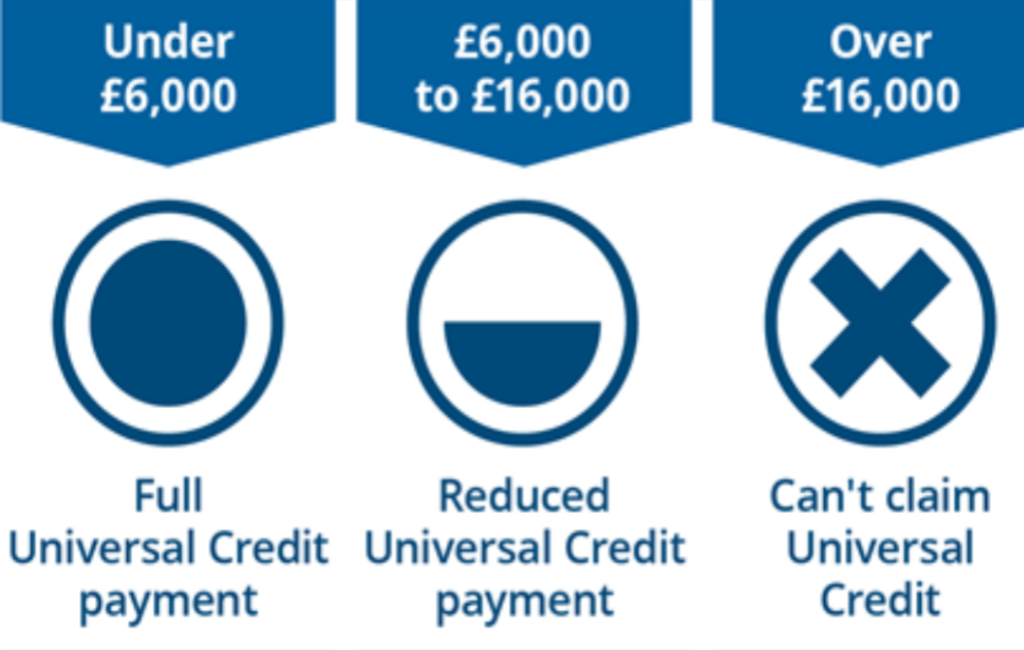























Get to know more about your eligibility before applying for Universal Credit
Universal Credit is replacing the following benefits:
If you currently get any of these benefits, you do not need to do anything unless:
You may be able to get Universal Credit if:
The number of children you have does not affect your eligibility for Universal Credit, but it may affect how much you get.
Your partner’s income and savings will be taken into account, even if they are not eligible for Universal Credit.
You can make a new claim for Universal Credit if any of the following apply:
If you’re studying full-time
You can also make a claim if you’re in full-time further education and any of the following apply:
You can make a new claim for Universal Credit if any of the following apply:
If you’re moving from Employment and Support Allowance (ESA)
You can make a new claim for Universal Credit if you’re in full-time education and all of the following apply:
you make a new claim before your ESA ends or as soon as you’re notified that your ESA claim has ended.
You may get more money on top of your standard allowance if you’re eligible.
If you have 1 or 2 children, you’ll get an extra amount for each child.
If you have 3 or more children, you’ll get an extra amount for at least 2 children. You can only get an extra amount for more children if any of the following are true:
You’ll get an extra amount for any disabled or severely disabled child – no matter how many children you have or when they were born.
How much you’ll get | Extra monthly amount |
For your first child | £282.50 (born before 6 April 2017) |
For your second child and any other eligible children | £237.08 per child |
If you have a disabled or severely disabled child | £128.89 or £402.41 |
If you need help with childcare costs | up to 85% of your costs (up to £646.35 for one child and £1,108.04 for 2 or more children) |
You might get the extra amount if you start caring for another child, depending on when they were born and how many children you have.
How much you’ll get | Extra monthly amount |
If you have limited capability for work and work-related activity | £343.63 |
If you have limited capability for work and you started your health-related Universal Credit or Employment and Support Allowance (ESA) claim before 3 April 2017 | £128.89 |
How much you’ll get | Extra monthly amount |
If you provide care for at least 35 hours a week for a severely disabled person who receives a disability-related benefit | £163.73 |
This is on top of any extra amount you get if you have a disabled child.
You could get money to help pay your housing costs. How much you get depends on your age and circumstances.
The payment can cover rent and some service charges.
If you’re a homeowner, you might be able to get a loan to help with interest payments on your mortgage or other loans you’ve taken out for your home.
| Cookie | Duration | Description |
|---|---|---|
| cookielawinfo-checkbox-analytics | 11 months | This cookie is set by GDPR Cookie Consent plugin. The cookie is used to store the user consent for the cookies in the category "Analytics". |
| cookielawinfo-checkbox-functional | 11 months | The cookie is set by GDPR cookie consent to record the user consent for the cookies in the category "Functional". |
| cookielawinfo-checkbox-necessary | 11 months | This cookie is set by GDPR Cookie Consent plugin. The cookies is used to store the user consent for the cookies in the category "Necessary". |
| cookielawinfo-checkbox-others | 11 months | This cookie is set by GDPR Cookie Consent plugin. The cookie is used to store the user consent for the cookies in the category "Other. |
| cookielawinfo-checkbox-performance | 11 months | This cookie is set by GDPR Cookie Consent plugin. The cookie is used to store the user consent for the cookies in the category "Performance". |
| viewed_cookie_policy | 11 months | The cookie is set by the GDPR Cookie Consent plugin and is used to store whether or not user has consented to the use of cookies. It does not store any personal data. |